
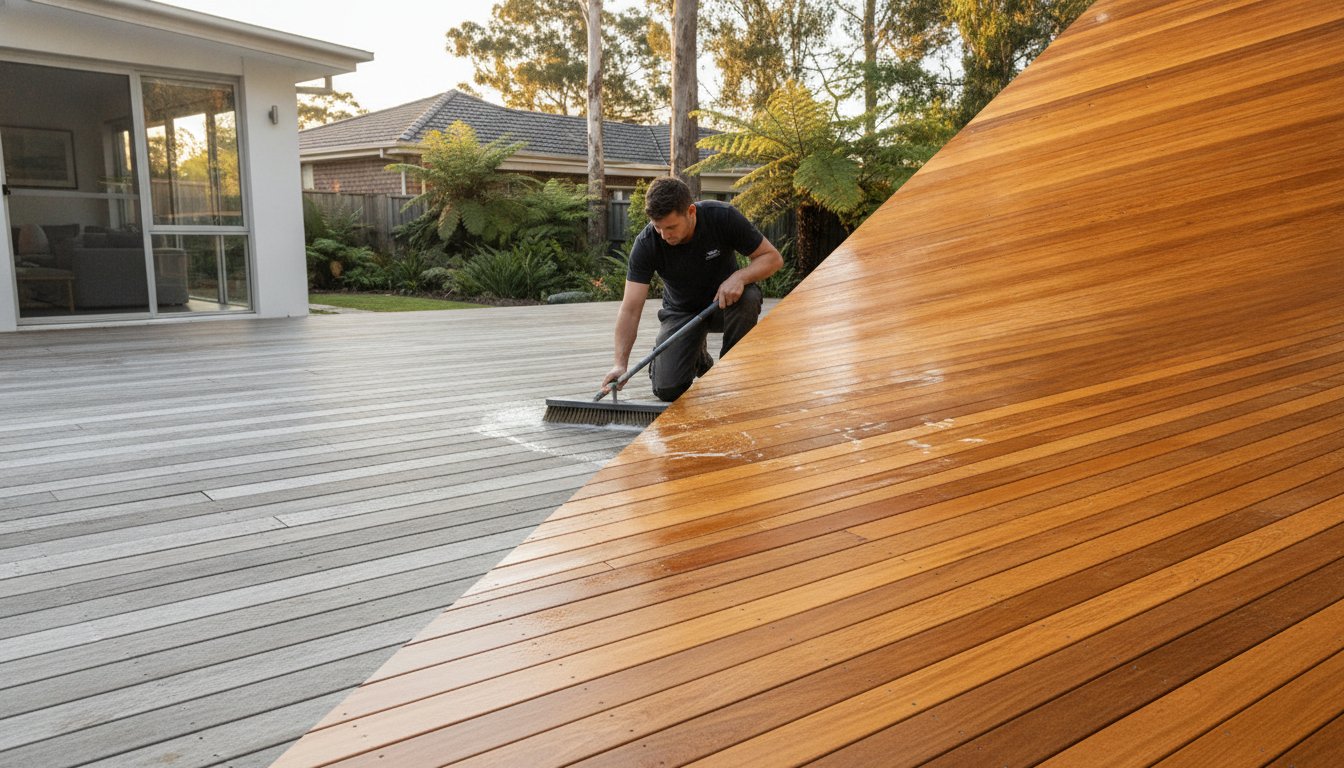
Is that grey, weathered timber actually "dead," or is it just waiting for the right professional intervention? Many Melbourne homeowners assume a quick coat of oil will hide the damage from a damp winter, but the truth is that your finish is only as good as the work you do before the brush even touches the wood. Learning how to prepare a deck for oiling Melbourne style requires more than a simple garden hose; it requires a strategic chemical and mechanical "reset" of the timber cells. We understand the frustration of seeing your premium Spotted Gum or Merbau turn into a slippery, silvered mess after just one Victorian winter. It's tempting to rush the process to get that honey-toned glow, but skipping the prep often leads to peeling and premature rot.
This 2026 guide promises to help you master the essential steps to prep your timber for a flawless finish that withstands our city's harsh UV and unpredictable rain. We'll clear up the confusion between chemical cleaning and sanding while providing a professional, step-by-step path to a durable result. You're about to learn how to transform your tired outdoor space into a stunning, resilient entertaining area that stays protected for years to come.
Key Takeaways
- Learn why Melbourne’s volatile climate requires a specialist "reset" of timber cells to prevent new oil from peeling or failing prematurely.
- Understand the science of tannins and lignin to ensure your chosen finish bonds deeply with the wood rather than sitting on the surface.
- Discover the professional methods for how to prepare a deck for oiling Melbourne homeowners can use to achieve a flawless finish.
- Gain the skills to perform the 30-second "Water Bead Test" to confirm your timber is open and ready to absorb a protective coating.
- Identify common preparation pitfalls like "fuzzing" or ignored tannins that can compromise the integrity of your outdoor entertaining area.
Why Melbourne Decks Require Specialist Preparation Before Oiling
Melbourne's weather is notoriously fickle, often cycling through four seasons in a single afternoon. This volatile climate creates a unique set of challenges for external timber. Your deck endures scorching UV radiation during the summer months, only to be saturated by consistent moisture throughout our damp winters. Because a deck is a horizontal surface, it doesn't shed water as easily as a wall. It's the hardest-working surface in your home, acting as the foundation for your outdoor lifestyle. Understanding how to prepare a deck for oiling Melbourne properties requires acknowledging that the environment is constantly trying to break down the wood's cellular structure.
Many homeowners fall into the trap of oiling directly over silvered or grey timber. This grey appearance isn't just a colour change; it represents a layer of dead wood fibres bleached by the sun. Applying oil over this "dead" wood is a recipe for disaster. The coating cannot bond with the healthy cells underneath, meaning it will likely flake, peel, and fail within a few months. The economic reality is simple. Spending roughly $500 on professional-grade preparation and cleaning can save you upwards of $5,000 in future timber replacement costs. High-quality Wood finishing relies entirely on the condition of the substrate before the first drop of oil is applied.
The Impact of Leafy Eastern Suburbs on Timber
In leafy areas such as Ringwood, Croydon, and Mitcham, the beautiful overhead canopy creates a specific biological challenge. While the shade is welcome in January, it traps moisture and drops organic matter that fuels mould growth. These fungal spores aren't just a surface stain; they burrow deep into the grain of the timber. A standard garden hose lacks the power to reach these hidden threats. Without a deep, restorative clean, you're essentially sealing active mould spores under your new finish, which eventually leads to wood rot from the inside out.
New Timber vs. Weathered Timber: Different Prep Paths
New decks and older, weathered decks require completely different approaches. Popular species like Merbau and Spotted Gum are rich in natural tannins. These organic compounds can actually repel new oil if they haven't been properly leached or chemically removed. If you don't allow new timber to "breathe" or use a specialist tannin stripper, your finish will likely look blotchy and uneven. On the other hand, weathered timber has already lost its lignin, the natural glue that holds fibres together. Mastering how to prepare a deck for oiling Melbourne decks means identifying whether your wood needs a gentle chemical reset or a more aggressive mechanical intervention to reveal the vibrant, healthy grain hidden beneath the silver surface.
The Science of Tannins, Lignin, and Coating Adhesion
Tannins are natural organic compounds found in high concentrations in Melbourne's favourite hardwoods, like Merbau and Spotted Gum, acting as a defensive barrier that can repel oils if they haven't been properly leached. When you understand the chemistry of timber, you realise that a successful finish isn't just about the oil you buy, but how you manage the wood's internal biology. Lignin is the organic "glue" that binds wood fibres together. However, Melbourne's intense UV radiation relentlessly attacks this glue, breaking it down and leaving behind a brittle, silvered surface. This degradation isn't just cosmetic; it changes the physical structure of the wood's surface.
The "Grey Ghost" effect describes this layer of dead surface cells. If you apply oil over this silvered facade, the product sits on top of a structural graveyard rather than penetrating the healthy timber. This leads to the frustrating "flaking" many homeowners experience just months after a DIY job. Essentially, the presence of residual tannins determines the depth and richness of your deck oil's final colour, often turning a light oil much darker or redder than intended if the wood isn't neutralised first. To get that high-end look, you need to clear the path for the oil to reach the living cells.
Understanding the Leaching Process
For years, the standard advice in Victoria was to let a new deck "weather" for at least six weeks to allow tannins to wash out naturally. In a Melbourne winter, this leaching process is obvious; you'll see dark, tea-like stains bleeding onto your surrounding concrete or pavers. While effective, this slow method leaves your timber vulnerable to the elements for over a month. Professional deck and patio cleaning uses specialised chemical strippers to accelerate this timeline, leaching the tannins in a single afternoon so you can get to the fun part of oiling sooner.
Why Dead Wood Cells Block Your Finish
Silvering is more than an aesthetic choice; it’s a physical barrier of dead cellulose. These fibres are brittle and lack the ability to absorb moisture or oil. When you're researching how to prepare a deck for oiling Melbourne, you must distinguish between surface dirt and structural grey weathering. Surface dirt washes away with a gentle scrub, but structural silvering requires a chemical "brightener" or light sanding to expose the "open" cells beneath. If you ignore this step, your expensive oil will simply sit on the surface, eventually peeling away like a bad sunburn. This is why a professional "reset" is the only way to ensure your coating actually adheres to the timber.
Soft Washing vs. Pressure Washing: Which is Safer for Your Deck?
Stop before you reach for that high-pressure wand. While it's tempting to blast away a winter's worth of grime in minutes, aggressive pressure is often the enemy of a long-lasting finish. When homeowners research how to prepare a deck for oiling Melbourne, they frequently overlook the mechanical damage caused by high PSI. Wood is an organic, fibrous material. Forcing water at high speeds into those fibres creates a phenomenon known as "fuzzing," where the timber surface becomes hairy and tactilely rough. This isn't just an aesthetic issue; it creates millions of tiny entry points for moisture and prevents your oil from laying flat, leading to a patchy, unprofessional result.
Professional restorers follow the "Volume over Pressure" rule. We prioritise high water flow (litres per minute) to rinse away contaminants rather than high pressure to cut through them. This approach ensures the structural integrity of the timber remains intact while still achieving a deep clean. Additionally, managing runoff is critical. We always pre-wet surrounding garden beds and use shielding to ensure that cleaning agents don't harm your prized landscaping. It's about being a meticulous caretaker of your entire property, not just the timber surface.
The Dangers of DIY Pressure Blasting
One of the most common sights we see in Melbourne backyards is "wand marks," which are permanent scars etched into the wood by a pressure washer held too close. You simply can't "un-blast" these marks without heavy, expensive sanding. Beyond the surface, high pressure can inject water up to 5mm deep into the timber. This trapped moisture creates a perfect breeding ground for internal rot, effectively destroying your deck from the inside out. Aggressive cleaning also lifts the grain, creating sharp splinters that can ruin a summer BBQ and make the surface unsafe for kids and pets.
The Soft Wash Restoration Method
Soft washing relies on chemistry rather than brute force. We use biodegradable cleaners that penetrate the wood to kill mould, mildew, and lichen at the root level. This is followed by a "brightening" step that restores the natural pH balance of the timber. This chemical reset opens the pores of the wood, allowing the oil to soak in deeply. In fact, decks treated with this methodical soft wash approach often hold their oil for 30% to 50% longer than those that have been blasted with high pressure. It is a gentler, more effective way to ensure your restoration stands the test of time.

Step-by-Step Preparation Checklist for Melbourne Homeowners
Mastering how to prepare a deck for oiling Melbourne homes begins with a systematic checklist. Start by clearing the entire area. Remove all furniture, pot plants, and BBQs to ensure you have an unobstructed workspace. This is also the perfect time to inspect the timber for "popped" screws or nails. Use a hammer or drill to reset these fixings; a flush surface is essential for both safety and an even oil application. Once the surface is clear and structurally sound, you move into the diagnostic phase to ensure the timber is actually ready to receive a new coating.
Deep cleaning follows the diagnostic test. Use a solution specifically formulated for your timber species. For example, Merbau requires a stronger tannin stripper compared to treated pine. Apply your cleaning solution and allow it to dwell without drying out, then rinse thoroughly. If you noticed "fuzzing" or lifted grain from a previous cleaning attempt, a light "buff" with 80-grit sandpaper may be necessary once the wood is dry. This removes the hairy texture and ensures a smooth, professional-grade finish underfoot during your next summer BBQ.
The Water Bead Test Explained
This 30-second check is the most critical step many DIYers skip. Use a simple spray bottle to mist water onto several areas of the dry deck, particularly in high-traffic zones and shaded corners. If the water absorbs into the wood within seconds, your timber is "open" and ready for treatment. However, if the water beads and sits on the surface, an old coating, factory oil, or wax is still present. You cannot proceed with oiling while water beads. The new oil will simply sit on top and fail to bond, leading to a sticky mess that peels within weeks. You must continue the cleaning process or use a stronger chemical stripper until the wood is thirsty enough to drink the water.
Timing Your Prep with Melbourne Weather
Melbourne’s humidity and sudden showers dictate your restoration schedule. You generally need a 48-hour window of clear skies after cleaning to ensure the timber is bone-dry. While the surface might feel dry to the touch, moisture can remain trapped deep in the grain. For a deeper look at professional restoration techniques, see our guide on Expert Deck Cleaning Melbourne: Restore Your Timber Entertainment Area. If you attempt to oil damp wood, the internal moisture will eventually push the oil out as it evaporates, causing unsightly bubbles and premature coating failure. If you'd rather leave the heavy lifting and technical diagnostics to the experts, contact us for professional deck and patio cleaning today.
Professional Deck Restoration in Eastern Melbourne
Platinum Power Washing brings more than 12 years of specialist experience to every timber restoration project across Melbourne. We understand that your deck is a significant investment and a central hub for family life. Our "Meticulous Caretaker" approach prioritises the long-term health of your timber while ensuring the surrounding property remains pristine throughout the process. While many homeowners attempt to navigate how to prepare a deck for oiling Melbourne themselves, professional intervention provides a level of uniformity and safety that DIY rentals simply cannot match. High-end industrial equipment allows for precise control over water volume and pressure. This technical precision eliminates the risk of the "wand marks" or "fuzzing" discussed in earlier sections, providing a perfectly smooth substrate for your chosen oil.
By choosing a specialist, you're investing in a result that looks better and stays protected for significantly longer than a standard wash. We take pride in the transformative power of our work, turning grey, slippery boards back into the vibrant focal point of your backyard. Our team remains disciplined and careful, protecting your garden beds and external fixtures while we perform the heavy-duty cleaning required to reset your timber's cellular structure. This professional "reset" is the only way to guarantee the deep penetration and rich colour that defines a high-quality restoration.
Our Multi-Step Timber Preservation Process
We don't believe in a one-size-fits-all solution for Victorian homes. Our process begins with a detailed structural inspection to identify any hidden dry rot or "popped" fixings that could compromise the final finish or safety of the area. Following this, we apply premium, timber-safe surfactants specifically designed to lift years of deep-seated grime and organic growth without stripping the wood's natural integrity. Finally, we utilise a low-pressure rinse to reveal the vibrant, natural grain underneath. This methodical approach ensures your timber is perfectly primed to absorb oil, providing a rich, honey-toned result that lasts through the harshest seasons.
Total Property Renewal
A restored deck often highlights other areas of the home that need attention. Coordinating your exterior maintenance saves time and ensures a cohesive aesthetic for your entire property. Many of our clients choose to pair their timber restoration with a Professional Driveway Cleaning Melbourne service to remove stubborn oil stains and tyre marks. If you're looking for a complete top-to-bottom refresh, we also specialise in Soft Wash House Cleaning in Ringwood and surrounding suburbs. This holistic approach protects your home's value and ensures your outdoor entertaining area is truly summer-ready. Contact us today to organise your free, no-obligation quote and take the first step toward a flawlessly restored deck.
Secure a Professional Finish for Your Outdoor Space
Your deck is more than just timber; it's the heart of your home's outdoor lifestyle. We've explored why understanding how to prepare a deck for oiling Melbourne properties requires a deep respect for our city's volatile climate. From managing tannin leaching in Merbau to avoiding the destructive "fuzzing" caused by high-pressure blasting, the secret to a honey-toned finish lies in the precision of your preparation. A professional soft-wash approach ensures that every wood cell is open and ready to bond with your chosen oil, providing a result that lasts through scorching summers and damp winters alike.
Don't risk permanent wand marks or premature peeling with a rushed DIY job. As a local, family-owned and operated business with over 12 years of Melbourne expertise, we use specialised soft-wash timber equipment to revitalise your space safely. We take pride in delivering a premium experience that preserves the long-term integrity of your assets. Get a Free Quote for Professional Deck Restoration and let us handle the technical diagnostics for you. Your perfectly restored entertainment area is just one expert clean away.
Frequently Asked Questions
How long should I wait after cleaning my deck before I start oiling?
You generally need to wait at least 48 hours of clear weather after a deep clean before you begin the oiling process. While the surface might feel dry to the touch within a few hours, internal moisture often remains trapped deep within the timber grain. If you apply oil while the wood is still damp, the coating will likely bubble or peel as that moisture tries to evaporate through the finish.
Is it better to sand or use a chemical cleaner to prepare my deck?
The best approach usually involves a combination of both, depending on the timber's condition. Chemical cleaners are essential for lifting organic growth, mould, and deep-seated tannins that sanding alone might miss. However, if your deck has severe "silvering" or "fuzzing" from previous high-pressure damage, a light sand after the chemical clean is necessary to reveal the healthy grain and ensure a smooth finish.
How can I tell if the old oil is completely removed?
Perform the Water Bead Test to confirm the wood is ready to absorb a new coating. Mist water onto several areas of the dry deck; if the water beads on the surface, a residual coating or wax is still present and will block the new oil. If the water absorbs into the wood within seconds, the timber is "open" and thirsty. This diagnostic is a vital part of how to prepare a deck for oiling Melbourne homes successfully.
Do I need to weather new Merbau decking before I oil it?
New Merbau requires a weathering period of approximately six weeks to allow natural tannins to leach out, or a professional chemical tannin stripper to accelerate the timeline. If you oil too early without removing these tannins, the finish will likely look blotchy and can turn an unattractive dark shade as the tannins react with the oil. Professional stripping allows you to oil almost immediately while ensuring a consistent colour.
What happens if it rains after I’ve cleaned the deck but before I oil it?
If it rains after cleaning, you must wait for the timber to become bone-dry again before you start oiling. This usually means restarting your 48-hour drying window from the moment the rain stops. Applying oil to rain-soaked wood is the most common cause of premature coating failure in Melbourne's unpredictable climate, as the trapped moisture prevents the oil from bonding with the timber cells.
Can I use a pressure washer to clean my deck myself?
Using a standard domestic pressure washer is risky because high pressure can easily "fuzz" the timber fibres and leave permanent wand marks. We recommend a soft-wash approach that relies on specialised biodegradable cleaners and high-volume rinsing. This method achieves a much deeper clean without the risk of mechanical damage, protecting the structural integrity of your timber while preparing it for a flawless finish.
Why does my timber look grey even after a deep scrub?
Timber looks grey because UV radiation has destroyed the lignin, leaving behind dead cellulose fibres on the surface. A standard scrub removes surface dirt but won't restore the colour of these dead cells. To fix this, you need a specialised timber "brightener" or a light sand to strip away this silver layer. This step is essential in how to prepare a deck for oiling Melbourne decks to ensure the vibrant, natural grain is visible.
Will the cleaning chemicals damage my garden or lawn?
Professional-grade biodegradable cleaners are safe for your garden when applied correctly by a meticulous caretaker. We always pre-wet surrounding foliage and use protective shielding to ensure runoff doesn't harm your lawn or prized plants. This careful management ensures your entire property remains protected while we work to restore your timber entertainment area to its former glory.


