

Did you know that your concrete driveway is essentially a giant mineral sponge? It's a frustrating reality for many homeowners who find themselves staring at unsightly dark patches that refuse to budge. When you're searching for the most effective oil stain removal concrete Melbourne has to offer, you quickly realise that a simple garden hose and some dish soap won't solve the problem. Those stubborn marks don't just ruin your kerb appeal; they can lead to genuine anxiety about your property value and even result in heavy EPA fines if oil runoff enters our local stormwater drains.
We understand the stress of trying to protect your investment while staying compliant with Victoria's strict environmental regulations. This guide will help you master the science of deep extraction and explain why professional hot-water pressure cleaning is the only reliable way to restore a uniform surface. You'll learn the crucial difference between a superficial surface clean and a deep pore extraction, giving you the clarity to know exactly when it's time to call in a specialist to save your driveway.
Key Takeaways
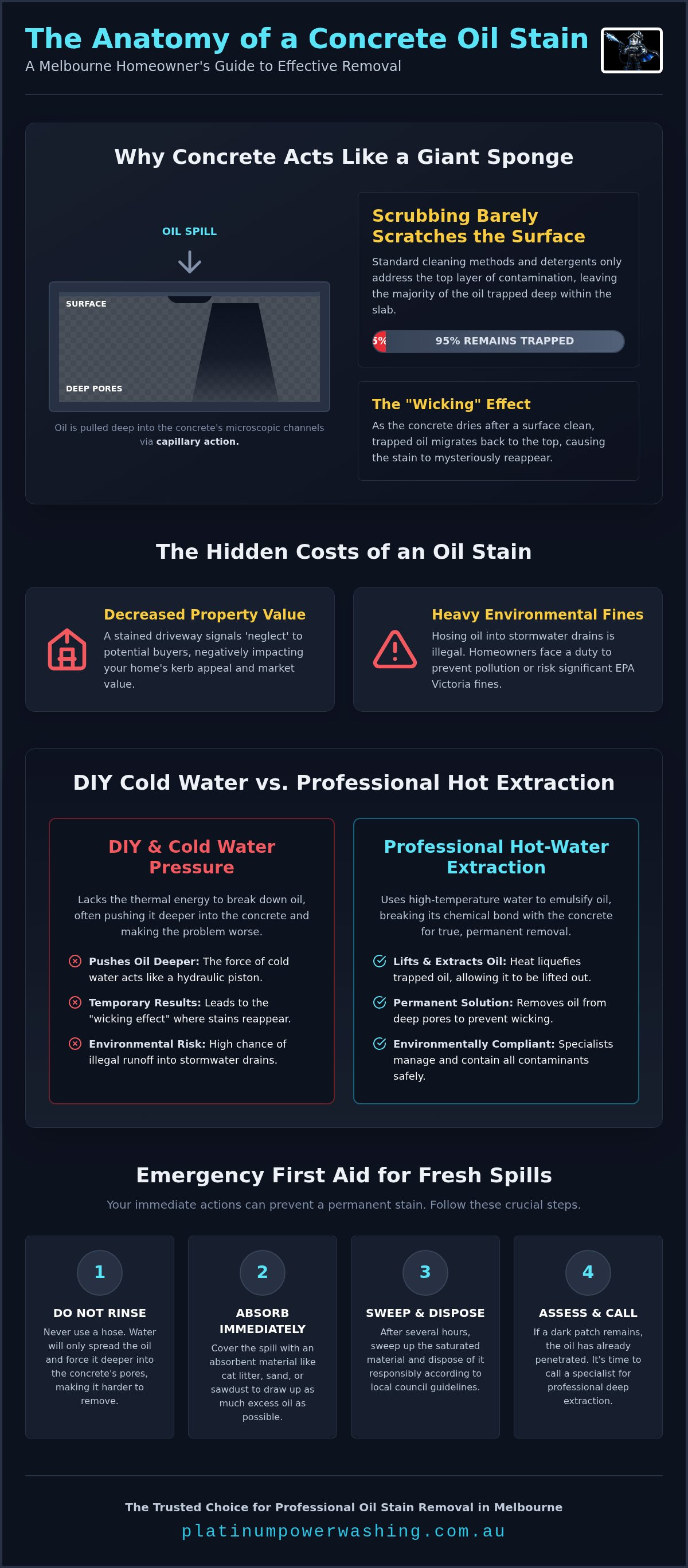
- Understand why concrete’s porous nature means standard scrubbing only addresses the top 5% of an oil stain.
- Learn the critical technical difference between domestic cold-water pressure and the high-heat extraction used by professionals.
- Master the immediate first-aid steps to take the moment you spot a leak to prevent deep-set damage.
- Discover how professional oil stain removal concrete Melbourne specialists restore kerb appeal while protecting the environment.
- Identify which common home remedies actually work and which ones could potentially damage your driveway's surface.
Why Oil Stains are a Headache for Melbourne Homeowners
Nothing ruins the look of a pristine property quite like a dark, greasy shadow right where you park the car. Whether it’s a slow drip from the family ute or a messy spill from a leaky mower engine in the garage, these marks are more than just an eyesore. They represent a deep-seated threat to your driveway’s integrity. Because concrete is a composite material, it doesn't just hold oil on the surface. To understand why these marks are so persistent, you have to look at the science of concrete porosity. Essentially, your driveway acts like a hard, mineral sponge that pulls liquids deep into its core through capillary action.
Melbourne’s legendary "four seasons in one day" creates a unique challenge for effective oil stain removal concrete Melbourne homeowners need. During a scorching afternoon, the heat expands the concrete’s pores and "bakes" the oil deep into the slab. When the inevitable cool change hits and the rain arrives, that water often sits on top of the oil or pushes it further into the substrate rather than washing it away. This constant cycle of heating and cooling turns a simple fresh spill into a stubborn, permanent blemish that resists standard scrubbing and domestic detergents.
The Kerb Appeal Factor in Eastern Melbourne
Your driveway is the literal red carpet to your home. In suburbs like Ringwood or Croydon, where property presentation is everything, a stained driveway sends a negative message to visitors and passers-by. Local real estate agents frequently highlight that a single large oil patch can trigger a psychological shift in a buyer’s mind, moving the property from "well-maintained" to "neglected" in seconds. This is why many professionals recommend a full concrete restoration before putting a house on the market; it’s about protecting the market value of your most significant asset and ensuring the first impression is one of quality.
Environmental Risks of DIY Oil Removal
Taking a "she’ll be right" approach to oil spills can lead to serious trouble with local authorities. EPA Victoria maintains strict regulations regarding what enters our stormwater system, and homeowners have a general environmental duty to prevent pollution. Many people mistakenly believe they can simply blast the oil onto the nature strip or down the gutter with a garden hose. This is a direct violation of environmental laws. Professional oil stain removal concrete Melbourne specialists use specialised equipment to ensure that contaminants are managed correctly, keeping our local waterways clean and protecting you from potentially massive fines. Choosing a professional service isn't just about the visual results; it’s the responsible choice for the local Melbourne environment.
The Science of Porosity: Why Concrete Acts Like a Sponge
Concrete porosity is the microscopic network of voids that trap contaminants. While your driveway appears solid and impenetrable, it actually functions as a complex web of tiny interconnected channels. This structural reality is the primary reason why oil stain removal concrete Melbourne homeowners attempt often fails to deliver lasting results. When you scrub the surface with a brush and some detergent, you’re only addressing the top 5% of the contamination. The bulk of the oil remains safely tucked away in the depths of the slab, far beyond the reach of a plastic bristle.
This deep-seated penetration leads to a phenomenon known as "wicking." You might feel a sense of victory after a vigorous afternoon of cleaning, only to find the dark shadow returning a few days later. As the concrete dries out, the oil trapped in the lower capillaries migrates back to the surface through capillary action. It’s a relentless cycle. Following professional guidance on stain removal is vital because it acknowledges that you aren't just cleaning a surface; you're attempting to decontaminate a three-dimensional mineral matrix.
The Anatomy of a Concrete Slab
During the initial curing process, water evaporates from the wet mix and leaves behind a labyrinth of microscopic "tunnels." These pathways are the perfect size for engine oil. Because oil has a lower viscosity than water, it can slip into these narrow gaps with ease. While a smooth, troweled garage floor offers some resistance, the rougher surface of an exposed aggregate or broom-finished driveway is highly absorbent. The oil doesn't just sit there. It travels downward, bonding with the internal structure of the concrete.
Why Cold Water Fails to Extract Oil
Standard garden hoses and domestic cold-water pressure washers often do more harm than good. Because oil and water are immiscible, the cold water stream acts like a hydraulic piston. Instead of lifting the stain, it frequently pushes the oil molecules deeper into the concrete’s silica structure. To achieve a true clean, you must break the molecular bond between the oil and the concrete. This requires significant thermal energy. Without high-heat water to emulsify the grease, the oil stays locked within the pores. If you want to stop the wicking cycle for good, investing in professional driveway cleaning is the most reliable way to ensure deep-pore extraction.
DIY vs. Professional Oil Stain Removal: What Actually Works?
Many homeowners begin their quest for oil stain removal concrete Melbourne at the local hardware store. It’s a logical first step. You grab a budget cold-water pressure washer and a bottle of generic degreaser, hoping for a quick fix. However, there is a massive technical gap between a 2000 psi domestic unit and the 3600+ psi professional systems we use. Cold water simply lacks the energy to move heavy oils. Worse still, inexperienced operators often try to compensate for this lack of power by holding the nozzle too close to the slab. This leads to "etching," a process where the high-pressure stream permanently carves away the concrete's top layer, leaving behind jagged scars that are impossible to repair.
The "Home Remedy" Hall of Fame (and Shame)
We’ve seen every DIY trick in the book. Kitty litter is a classic, and while it’s excellent for absorbing a fresh puddle of oil, it does absolutely nothing for a stain that has already soaked into the slab. Hardware store degreasers often come with their own risks; many have exceptionally high pH levels that can discolour or even weaken the concrete surface if left too long. Then there is the "elbow grease" approach. Scrubbing a specific spot with a heavy wire brush often creates a "clean halo." This permanent bright patch looks just as out of place as the original oil stain, highlighting the area rather than blending it back into the rest of the driveway.
The Professional Advantage: Heat and Chemistry
True restoration requires a combination of thermal energy and specialised chemistry. We don't just blast the surface; we treat it carefully. Our process uses professional-grade alkaline detergents designed to emulsify the oil, breaking it down so it can be lifted out of the pores. The real secret weapon is our hot-water capability. We can heat water up to 90 degrees Celsius, which is essential for melting solidified grease and oil. To ensure a uniform result, we use "Whirlaway" surface cleaners. These circular attachments provide consistent pressure across the entire slab, preventing the "tiger stripes" or streaks commonly seen with handheld domestic wands.
When you weigh the costs, the choice becomes clear. A professional service provides a deep-pore extraction that prevents the wicking cycle, all while protecting your driveway from the risk of permanent etching. It’s an investment in your property's longevity that far outweighs the price of a DIY attempt gone wrong. Protecting your concrete means using the right tools for the job, ensuring the surface remains clean, uniform, and structurally sound for years to come.
Emergency First Aid: What to Do the Moment You Spot a Leak
Speed is your greatest ally when a vehicle starts leaking on your driveway. Because we’ve already established that concrete acts like a mineral sponge, every second the liquid sits undisturbed allows it to travel deeper into those microscopic pores. However, the wrong reaction can be just as damaging as the leak itself. Many homeowners instinctively reach for the garden hose, but this is a critical mistake. Blasting a fresh spill with water actually lowers the oil's viscosity and helps it slide further into the slab, making future oil stain removal concrete Melbourne specialists perform far more difficult.
Your first priority is containment. Under EPA Victoria’s General Environmental Duty, every Melburnian is legally responsible for preventing waste and chemicals from entering stormwater drains. If rain is forecast, you must block the path to the gutter immediately. Use a physical barrier like a bag of sand or even a rolled-up old towel to ensure the oil doesn't wash away into our local waterways. Once the area is secure, you can begin the process of lifting the liquid before it has a chance to bond with the silica in the concrete.
The Critical First 30 Minutes
Grab a stack of old rags or heavy-duty paper towels and begin blotting the spill. Never use a circular scrubbing motion. Pushing a brush against a fresh puddle effectively "injects" the oil into the concrete’s tunnels. Instead, press down firmly with absorbent material to lift as much liquid as possible. Once the standing pool is gone, cover the remaining damp patch with a thick layer of absorbent powder. While dedicated spill kits are best, common household items like kitty litter, sand, or even plain flour can successfully pull liquid out of the surface through reverse capillary action. Keep this material on the spot for at least 20 minutes to maximise extraction.
Identifying the fluid is also vital for your next steps. Engine oil is typically dark brown or black and feels thick. If the fluid is bright red, it’s likely transmission fluid; if it’s green, pink, or blue and smells sweet, it’s coolant. While coolant is water-soluble, it’s highly toxic to pets and local wildlife, so the same containment rules apply. Keeping a dedicated "emergency bag" of absorbent material in your garage is a smart move for any Melbourne car owner, especially those with older utes or machinery.
When to Stop DIY and Call the Pros
Knowing when to put the brush down will save your driveway from permanent damage. We recommend the "Three Wash Rule." If you have attempted to clean the spot three times with domestic degreasers and the shadow remains unchanged, stop immediately. Repeatedly applying harsh chemicals or high-pressure cold water to weathered concrete can weaken the surface paste, leading to aggregate pop-outs or permanent etching. Older slabs are particularly vulnerable and require the "gentle but tough" approach that only industrial equipment can provide. If the stain has already "baked in" or shows signs of deep chemical bonding, it’s time to book a professional driveway restoration to ensure the job is done safely and thoroughly.
Professional Concrete Restoration in Eastern Melbourne
Restoring a driveway to its original glory requires more than just water and pressure; it demands a specialist’s touch. At Platinum Power Washing, we’ve spent years perfecting our approach to oil stain removal concrete Melbourne homeowners can rely on. Our service area stretches across the Eastern Suburbs, including Ringwood, Croydon, and Wantirna, where we encounter everything from weathered aggregate to smooth garage floors. We don't believe in a one-size-fits-all solution. Instead, we assess the age and condition of your slab before applying a meticulous restoration process that prioritises both cleanliness and surface protection.
Our "Platinum Standard" of service begins with a professional chemical pre-treatment. We use specialised alkaline agents to break the bond between the oil and the concrete silica. Once the contaminants are emulsified, our high-heat extraction units take over. By utilising water temperatures up to 90 degrees Celsius, we melt away stubborn grease that cold-water machines simply cannot touch. This deep-pore cleaning ensures a uniform, streak-free finish without the risk of "zebra stripes" or permanent surface etching often caused by domestic equipment. We treat your property with the discipline of a meticulous caretaker, ensuring every square metre is restored to a premium standard.
Once your driveway is thoroughly decontaminated, we highly recommend professional sealing. Think of sealer as a protective shield that closes those microscopic "sponge" pores we discussed earlier. A high-quality sealer prevents future leaks from car engines or garden tools from soaking into the substrate, making maintenance much simpler. It’s the final step in property value protection, ensuring your clean, uniform surface stays that way despite Melbourne's unpredictable weather cycles.
Our Local Expertise in the Eastern Suburbs
Melbourne’s specific concrete types and environmental conditions require a tailored approach. Our team brings 12+ years of experience in driveway cleaning Melbourne to every job site. We understand local council by-laws and EPA regulations regarding stormwater protection, ensuring our work is as environmentally responsible as it is effective. We take immense pride in delivering a service that combines heavy-duty "toughness" with a gentle touch for your delicate exterior surfaces.
Take the Next Step to a Pristine Driveway
Reclaim your property’s kerb appeal and eliminate the anxiety of permanent damage or environmental fines. A professionally restored exterior doesn't just look better; it provides the peace of mind that comes with knowing your investment is protected by seasoned experts. We provide clear, descriptive assessments for both residential and commercial property owners across Melbourne's east.
Contact Platinum Power Washing today for expert oil stain removal!
Restore Your Driveway’s Pristine Finish
Protecting your property value starts with understanding the complex nature of your concrete. We've explored how the "mineral sponge" effect traps oil deep within the slab, making standard cold-water scrubbing largely ineffective. Attempting a DIY fix with domestic gear often leads to permanent etching or unsightly streaks, rather than the uniform restoration you deserve. Choosing a professional approach means leveraging thermal energy and specialised chemistry to lift contaminants without damaging the underlying material.
With 12+ years of local experience across Ringwood, Croydon, and Wantirna, our team understands the exact requirements for effective oil stain removal concrete Melbourne homes and businesses need. We utilise industrial-grade hot water pressure units to decontaminate your surfaces thoroughly and safely. Don't let a temporary leak become a permanent blemish on your property's kerb appeal. It's time to invest in a deep-pore clean that truly lasts.
Get a Free Quote for Professional Oil Stain Removal
Take the first step toward a cleaner, safer, and more valuable home today. You'll be amazed at the transformative power of a professional high-heat extraction.
Frequently Asked Questions
Can all oil stains be completely removed from concrete?
Most oil stains can be significantly reduced or lightened, though total removal isn't always possible for very old or deeply embedded spills. The success of the restoration depends on how long the oil has had to "bake" into the concrete's pores and the underlying porosity of the slab. While some extreme cases may leave a faint shadow, professional high-heat extraction offers the highest probability of achieving a clean and uniform surface.
Will pressure washing damage my concrete driveway?
Professional pressure washing will not damage your driveway when performed by an expert using the correct equipment and pressure settings. The risk of damage, such as surface etching or aggregate pop-outs, usually occurs with domestic units or inexperienced operators who hold the nozzle too close to the slab. We utilise a "gentle but tough" methodology that prioritises the long-term integrity of your concrete while ensuring a deep clean.
Is it safe to use dish soap to remove oil from concrete?
Dish soap is safe to use on concrete, but it is generally only effective for fresh, superficial spills that haven't yet soaked into the substrate. It acts as a basic degreaser for the surface layer but lacks the chemical strength to emulsify oil that has migrated deep into the slab's capillaries. For stubborn or older marks, specialised alkaline detergents and thermal energy are required to lift the contamination from the core of the concrete.
How much does professional oil stain removal cost in Melbourne?
The cost of oil stain removal concrete Melbourne property owners can expect depends on the total area of the driveway and the severity of the contamination. Every project is unique; factors such as the age of the concrete and the depth of the staining will influence the amount of time and specialised chemistry required. We recommend getting an obligation-free assessment to understand the specific requirements for your property's restoration.
How long does the professional cleaning process take?
A standard residential driveway cleaning typically takes between two and four hours to complete. This timeframe allows for a thorough chemical pre-treatment, the high-heat extraction process, and a final rinse to ensure all residue is removed. Larger properties or commercial sites with extensive staining may require additional time to ensure the result meets our meticulous standards of cleanliness.
Can I prevent future oil stains from soaking into my driveway?
Applying a high-quality concrete sealer is the most effective way to prevent future oil stains from bonding with your driveway. The sealer creates a protective barrier that fills the microscopic voids in the concrete, keeping liquids on the surface rather than allowing them to soak in. This makes it much easier to blot up accidental leaks from the family ute or mower before they cause permanent damage.
What happens if oil runoff enters the Melbourne stormwater system?
Allowing oil or chemical runoff to enter the stormwater system can result in substantial fines from EPA Victoria. Our local stormwater drains flow directly into creeks and Port Phillip Bay without being treated, making it a serious environmental concern. Professional cleaners use specific containment practices to ensure that all contaminants are managed responsibly and in full compliance with Melbourne's environmental regulations.
Does hot water pressure washing work better than cold water?
Hot water is significantly more effective than cold water for removing petroleum-based stains. Thermal energy, often reaching up to 90 degrees Celsius, is required to break the molecular bond between the oil and the concrete silica. While cold water often just pushes the oil deeper into the slab, hot water emulsifies the grease, allowing it to be drawn out of the pores for a truly restorative clean.


