What if that unsightly dark patch on your concrete isn't a permanent scar, but simply a chemical puzzle waiting for the right solution? Most Melbourne homeowners feel a sense of dread when they spot a fresh leak, fearing that oil stain removal driveway efforts will only result in permanent ghosting or damaged surfaces. It's a valid concern; your driveway is a major part of your property's kerb appeal, and the last thing you want is to swap an oil spot for a chemical burn that ruins the finish or harms your garden.
We understand that you want a clean, uniform surface without compromising the safety of your pets or the local environment. This guide provides the exact steps required to lift even the most stubborn patches using modern, effective techniques. We'll walk you through the transition from DIY absorbent methods to professional chemical extraction, helping you decide when it's time to bring in the experts to save your concrete and restore that pristine look.
Key Takeaways
- Act immediately within the first 30 minutes to blot fresh leaks, preventing gravity from pulling contaminants deep into the porous concrete slab.
- Master the specific chemical extraction techniques required for oil stain removal driveway success, ensuring you draw hydrocarbons out rather than forcing them in.
- Avoid the common mistake of using high-pressure domestic washers alone, which can cause permanent surface etching or "inject" oil deeper into the substrate.
- Discover how industrial-grade hot water units and professional emulsification break molecular bonds to restore a clean, uniform finish to your property.
- Recognise when a stain requires specialist intervention to protect your home's kerb appeal and ensure the long-term integrity of your driveway.
Why Oil Stains Are a Nightmare for Melbourne Driveways
Concrete driveways across Melbourne aren't the solid, impenetrable blocks they appear to be. From the sleek finish of a new build in Point Cook to the classic exposed aggregate of a Toorak manor, these surfaces are essentially massive, rigid sponges. Concrete contains thousands of microscopic pores and capillaries created during the curing process. When a vehicle leaks, gravity immediately pulls the liquid downward, while capillary action draws it sideways into the surrounding material. This dual-action movement means that within minutes, a surface spill becomes a deep-seated structural issue.
The chemistry of the spill makes the situation even more complex. Hydrocarbons found in motor oils don't just sit in the pores; they eventually begin to bond with the cement paste itself. By understanding how stains are removed at a molecular level, we can see that simple washing won't suffice once this bond forms. Melbourne's unique climate adds another layer of difficulty. Our high humidity levels and frequent, sudden rain showers can actually "lock" oil into the surface. Water often carries the oil deeper into the slab before evaporating, leaving the heavy hydrocarbons trapped where traditional cleaning methods can't reach them.
The Difference Between Fresh Spills and Set-In Stains
Timing is everything for successful oil stain removal driveway projects. For a brief window, surface tension keeps the oil from fully penetrating the concrete. If you catch it here, the oil remains a liquid that you can still extract. However, Melbourne's harsh sun quickly triggers oxidisation. This process turns the oil into a sticky, dark resin that is far more difficult to dissolve. Even after a thorough clean, you might notice a "ghosting" effect. This faint outline occurs because the oil has permanently altered the light-reflective properties of the concrete's internal pores.
Identifying the Contaminant: Not All Oil is Equal
Before starting any cleaning process, you must identify what exactly leaked onto your slab. Different fluids require different chemical approaches:
- Engine Oil: Typically dark black and highly viscous. It leaves a heavy residue that requires strong emulsifiers.
- Transmission Fluid: Usually red or pink with a thinner consistency. It penetrates deeper and faster than engine oil.
- Power Steering Fluid: This is arguably the most aggressive contaminant. It can actually soften and degrade driveway sealers on contact.
- Cooking Oil: Organic fats from a spilled takeaway bag or a BBQ leak behave differently. These require specific surfactants to break down the natural fatty acids.
Identifying these fluids early helps you choose the right strategy for oil stain removal driveway maintenance, ensuring you don't waste time with ineffective products that might only push the contaminant deeper into your concrete.
Immediate DIY Steps: How to Treat a Fresh Oil Leak
Speed is your greatest ally. When you see that fresh, shimmering puddle on your concrete, you have roughly 30 minutes before the pores begin to swallow the hydrocarbons. Timing is crucial for successful oil stain removal driveway efforts at home, as catching the spill while it still sits on the surface significantly increases your chances of a total restoration.
Always blot; never rub. Rubbing is a common mistake that grinds the oil deeper into the slab, making future extraction nearly impossible. Use old rags or thick paper towels to lift as much liquid as possible from the surface. Once you have removed the standing liquid, bury the remaining patch under a generous layer of absorbent material. This process relies on "drawing" the oil upward rather than pushing it down. For a detailed look at various poultice methods, you can research how to remove oil stains from concrete to see how different materials react with the substrate.
The secret to DIY success lies in dwell time. You must leave your chosen absorbent to sit for at least 12 to 24 hours. This patience allows the material to wick the oil from the microscopic crevices we discussed in the previous section. If the spill is large or you're worried about leaving a permanent mark, our professional driveway cleaning experts can provide a more thorough extraction using industrial-grade equipment.
The Best Household Items for Oil Absorption
You don't always need specialised chemicals to start the process. Standard clay-based kitty litter is the most accessible high-absorbency mineral for most Melbourne homeowners. It's inexpensive and highly effective at pulling liquid from porous surfaces. For very light, fresh drips, common kitchen staples like cornstarch or baking soda work surprisingly well. They have a fine particle size that reaches deep into the texture of the concrete. If you're dealing with a major leak, a trip to the local hardware store for a commercial "Oil-Dri" product is a wise investment for your garage shelf.
Safe Scrubbing Techniques for Homeowners
After sweeping up the absorbent, you'll likely see a residue. Selecting the right brush is vital; always use a stiff nylon or synthetic bristle brush. Avoid wire brushes at all costs, as they can etch the concrete or leave behind tiny metal fragments that will eventually rust and create orange stains. Use a heavy-duty dish soap as a surfactant to break the remaining molecular bond. When rinsing, be extremely careful not to wash the oil-slicked water onto your lawn or into the stormwater drains. Melbourne's environmental regulations require us to be mindful of runoff, so try to direct the water to a garden bed where soil microbes can break down the trace oils safely. Mastering these DIY steps for oil stain removal driveway maintenance can prevent permanent damage and keep your property looking its best.
Why High Pressure Alone Can Make the Stain Worse
Instinct often tells you to grab a pressure washer and blast that dark patch away. Stop right there. Using high pressure without the correct chemical preparation often leads to "injection," where the force of the water actually hammers the oil molecules deeper into the concrete pores. Instead of oil stain removal driveway success, you end up with a contaminant that is now physically wedged into the substrate, making future professional extraction significantly harder.
Cold water is another major hurdle. Most domestic machines only use cold water, which is like trying to wash a greasy frying pan with ice water. It simply doesn't work. The oil remains thick and viscous, resisting the mechanical force of the spray. Professional results rely on a "chemical-first" approach where the solution does 90% of the heavy lifting, followed by controlled heat to melt the hydrocarbons. Without this thermal element, you're just moving the oil around rather than removing it.
Understanding Surface Porosity and Pressure
Different surfaces carry different risks. Stencil-crete and smooth-trowelled finishes are particularly vulnerable to "etching," where the high-pressure stream strips away the fine "cream layer" of the concrete. This leaves permanent wand marks that look like white zig-zags across your property. Exposed aggregate is tougher, but excessive pressure can dislodge the stones, ruining the uniform texture. Without a specialised wide-fan nozzle and pressure regulator, a standard 3000 PSI blast will likely destroy your concrete's finish long before it removes the oil.
The Myth of the "Magic" Degreaser
Many retail degreasers promise instant results, but they often lack the strength to tackle ten-year-old stains. While "bio-friendly" products are excellent for the environment, they frequently fail to break the molecular bond of oxidised resin. This is where pH balance becomes critical. Using an overly acidic or alkaline cleaner without proper neutralisation can cause permanent discolouration, leaving a bright white "clean spot" that is just as unsightly as the original oil. This leads to the "shadow" effect, where a faint silhouette of the stain remains visible because the chemical process was incomplete. Achieving true oil stain removal driveway results requires professional-grade emulsifiers that suspend the oil in a liquid state so it can be safely rinsed away without leaving a permanent ghosting mark behind.

The Professional Process: How We Restore Melbourne Driveways
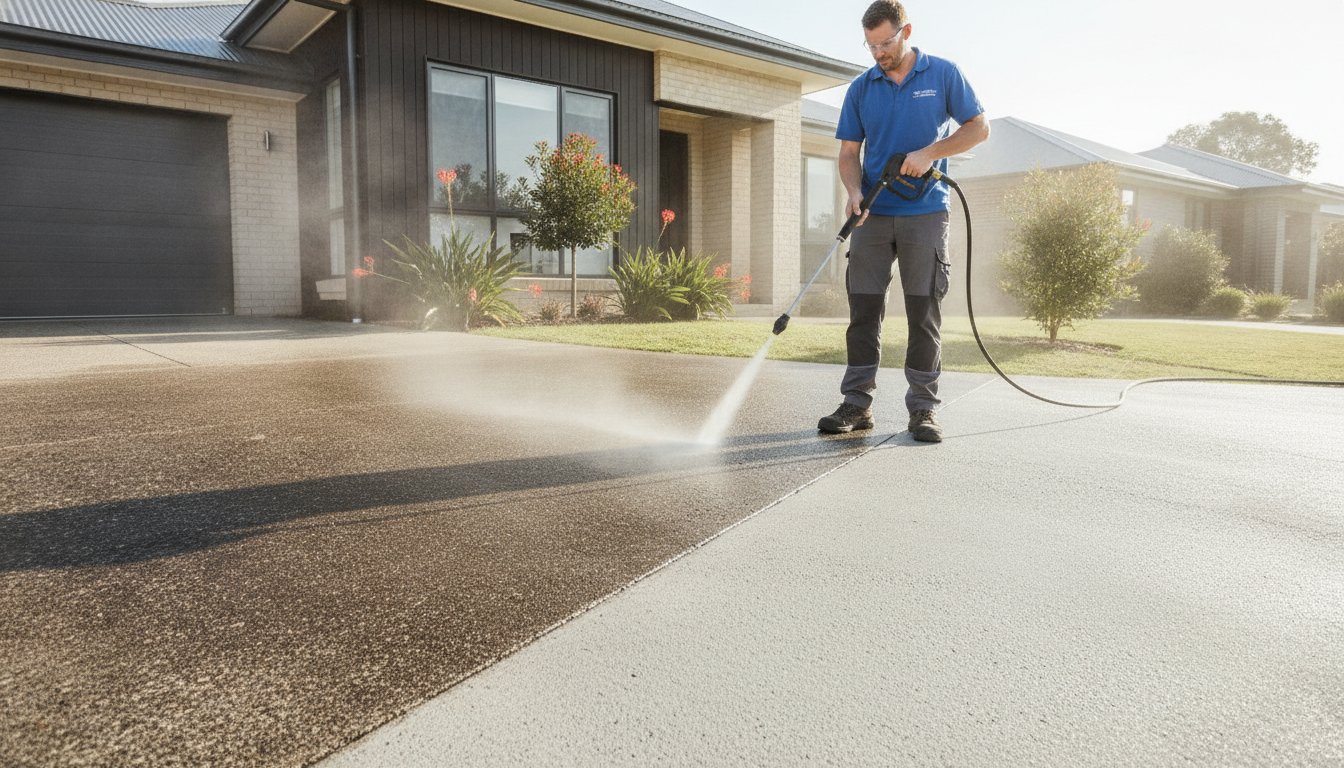
Professional oil stain removal driveway services rely on a combination of thermal energy and advanced chemistry. While domestic machines struggle with ambient water temperatures, we utilise industrial-grade hot water units that reach temperatures specifically designed to liquefy hardened hydrocarbons. This intense heat reduces the viscosity of the oil, allowing it to be lifted from the depths of the concrete substrate where cold water simply cannot reach.
Once the oil is liquefied, we apply professional-grade emulsifiers. These are not standard retail degreasers; they are engineered to break the molecular bond between the oil and the stone. This suspension process ensures the contaminant is held in a liquid state, ready for total extraction. We then employ vacuum recovery technology to suck up the wastewater at the point of contact. This ensures we don't just wash the mess into the street, but actually remove it from your property entirely.
Environmental Responsibility in Eastern Melbourne
Protecting the local environment is a non-negotiable part of our service. Under EPA Victoria's general environmental duty, it is illegal to allow oil-contaminated water or cleaning chemicals to enter the stormwater system. This is a common oversight in DIY attempts that can lead to significant legal complications. We take this responsibility seriously, particularly when working in the leafy Eastern Suburbs where runoff can quickly reach local waterways.
Our team employs specialised bunding and capture systems to isolate the work area. By controlling the flow of water, we ensure that no harmful surfactants or oil residues leach into your soil or damage your precious plants. This meticulous approach safeguards your garden while meeting all local regulatory requirements, providing you with peace of mind that your property's restoration is being handled ethically and safely.
Post-Cleaning Restoration and Sealing
Removing the stain is a vital first step, but concrete cleaning Melbourne homeowners often find is only half the battle. Once the pores are clean, they are also empty and vulnerable to the next leak. We recommend applying high-quality penetrative sealers that create a molecular barrier against future spills, making subsequent maintenance much easier.
For driveways that have suffered long-term damage or severe "ghosting," we offer colour-matching and tinting options. These treatments restore a uniform appearance to the slab, effectively erasing the history of past leaks and significantly boosting your home's kerb appeal. If you want to transform your property's entrance and secure its long-term integrity, book a professional driveway assessment with our expert team today. We'll ensure your concrete looks as good as the day it was poured, protected by the latest in restoration technology.
When to Call the Experts at Platinum Power Washing
Deciding when to transition from DIY efforts to professional intervention depends on two main factors: the age of the contaminant and your desired outcome. If you're staring at a large, dark patch that has oxidised over several months, home-grade oil stain removal driveway attempts often become a frustrating waste of time. These set-in stains require the thermal power and industrial emulsifiers we've discussed to achieve a truly uniform finish without damaging the substrate.
Preparing a property for sale is another critical moment to call in the specialists. Your driveway is the first thing potential buyers see; a clean, restored entrance significantly boosts kerb appeal and perceived value. With over 12 years of experience across Ringwood and Croydon, our team understands the transformative power of a deep, professional clean. We provide fast, obligation-free quotes to help you plan your property maintenance with confidence and clarity.
Specialised Equipment for Superior Results
Standard pressure washing lances often leave "zebra stripes" or inconsistent patches on concrete. We avoid this by using commercial-grade rotary surface cleaners that provide even, high-impact coverage across the entire slab. These units work in tandem with our truck-mounted hot water systems to succeed where garden hoses and domestic washers fail. By choosing a professional driveway cleaning Melbourne service, you're investing in a restoration that lasts, rather than a temporary surface wash that leaves the root of the stain behind.
Our Local Service Area and Commitment
We take immense pride in serving our local community, including Ringwood, Croydon, Chirnside Park, and Wantirna. Our deep knowledge of Melbourne’s unique conditions, such as the clay-heavy soil common in the Eastern Suburbs, allows us to tailor our approach to your specific driveway style. Whether you're dealing with exposed aggregate or decorative stencil-crete, we have the expertise to protect your assets while delivering a premium result. Contact us today to book your driveway restoration and experience the meticulous care your home deserves.
Restore Your Driveway’s Pristine Finish
Reclaiming your driveway from stubborn oil patches requires a balance of immediate action and technical precision. You've learned that while blotting fresh leaks is vital, the real challenge lies in extracting set-in hydrocarbons without etching the concrete or violating local environmental regulations. Achieving successful oil stain removal driveway results often moves beyond household soaps and cold-water hoses; it demands a deeper, more methodical approach to protect your property's long-term value.
Don't let a temporary leak become a permanent scar on your home. With over 12 years of local Melbourne experience, we utilise specialised hot-water pressure equipment and EPA-compliant methods to safely lift even the most persistent marks. We handle the tough tasks so you don't have to worry about ghosting or chemical runoff. Get a Free Quote for Professional Driveway Cleaning today and see the transformative difference our Master Specialists can make. Your concrete is an investment; let's ensure it stays clean, protected, and looking its absolute best for years to come.
Frequently Asked Questions
Can you really remove 10-year-old oil stains from concrete?
Yes, you can remove older stains, but success depends on the depth of the hydrocarbon bond. Professional hot-water extraction is required to liquefy the resin that has formed over a decade. While a faint "ghosting" shadow might remain on very old concrete, the heavy dark patch can typically be eliminated to restore a uniform look to your property.
Is it illegal to wash oil down the driveway in Melbourne?
Yes, it is illegal to allow oil-contaminated water to enter Melbourne's stormwater system under EPA Victoria regulations. Residents have a "general environmental duty" to prevent harm to waterways. This means you must capture runoff or direct it to a garden bed where soil microbes can safely break down the residue rather than letting it reach the street drain.
Will pressure washing my driveway damage the surface?
Incorrect pressure washing can certainly damage your concrete by stripping the protective cream layer or etching permanent wand marks. Using excessive PSI or a narrow nozzle often does more harm than good. Professionals use rotary surface cleaners and adjusted pressure settings to ensure the concrete remains intact while the contaminants are thoroughly removed.
How much does professional oil stain removal cost?
Professional oil stain removal driveway costs depend entirely on the age, size, and severity of the contamination. Older, deeply set-in stains require specialised chemical treatments and longer dwell times, which influences the final investment. We recommend requesting a site assessment to get an accurate, obligation-free quote tailored to the specific condition of your concrete.
What is the best household product for a fresh oil leak?
Clay-based kitty litter is the most effective household item for a fresh spill. It works by wicking the liquid oil out of the concrete pores before it has a chance to settle deep into the slab. For very light drips, baking soda or cornstarch are excellent alternatives that provide high absorbency for immediate treatment of the affected area.
Does sealing a driveway prevent oil stains from sinking in?
High-quality penetrative sealers act as a protective shield that prevents oil from sinking into the concrete's microscopic pores. While a sealer doesn't make the surface entirely self-cleaning, it keeps the oil on top of the slab. This gives you much more time to clean up a leak before it causes a permanent, unsightly stain.
How long does the professional cleaning process take?
Most professional driveway cleaning jobs are completed within two to four hours. This timeframe includes the pre-treatment of stubborn spots, the hot-water pressure wash, and the final rinse or vacuum recovery. Larger commercial properties or residential driveways requiring specialised sealing will naturally take longer to ensure a premium, long-lasting result.
Can I use bleach to remove oil stains from my driveway?
Bleach is not an effective solution for oil stains because it doesn't break down hydrocarbons. It's a disinfectant and whitener, not a degreaser. Using bleach can actually lead to permanent discolouration of your concrete, creating a bright white patch that highlights the original stain rather than actually removing the oil from the pores.


