
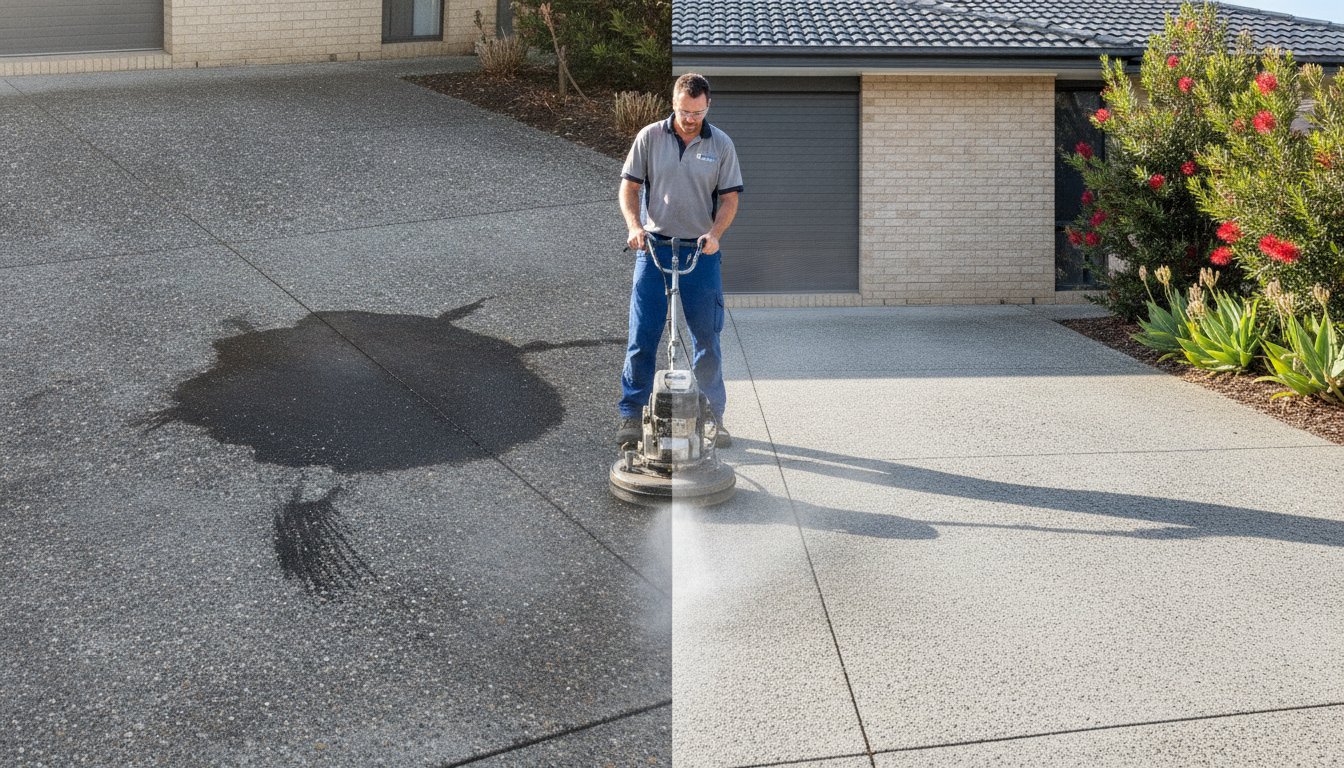
Most homeowners think a bucket of soapy water and a stiff brush will fix a leak, but scrubbing a fresh spill often does more damage than the oil itself. That stubborn dark patch under the ute isn't just an eyesore; it's a chemical bond that standard detergents simply can't break. You've likely tried the hardware store degreasers or the old bicarb soda trick, only to find a permanent white "ghost" mark left behind once the surface dries. We understand the frustration of watching your home's kerb appeal vanish because of a single mechanical mishap. When it comes to oil stain removal concrete driveway Melbourne residents often find that the harder they scrub, the deeper the contaminant settles into the porous stone.
This guide will teach you how to master the professional "triple-threat" process: chemical emulsification, thermal agitation, and mechanical extraction. We'll show you how to eliminate those slippery patches and unsightly tyre marks using the same high-standard methods we use to restore properties across Victoria. You'll learn why temperature matters, how to comply with Melbourne's Permanent Water Saving Rules using low-flow equipment, and exactly which professional-grade techniques prevent stains from reappearing. It's time to stop guessing and start restoring your driveway to its original, pristine condition.
Key Takeaways
- Understand why concrete acts as a magnet for hydrocarbons and how Melbourne's high-traffic "ute" culture contributes to deep-seated driveway damage.
- Learn the professional secrets for oil stain removal concrete driveway Melbourne residents can use to eliminate stubborn patches without leaving permanent "ghosting" marks.
- Discover the critical difference between domestic pressure washers and professional-grade machinery, focusing on why high flow rates are essential for deep extraction.
- Master the step-by-step restoration process, from protecting your garden beds to using the correct absorption techniques for fresh spills.
- Identify why sealing your concrete after cleaning is the ultimate insurance policy to prevent new oil leaks from penetrating the surface.
What is Oil Stain Removal for Concrete Driveways in Melbourne?
Professional oil stain removal is far more than a simple high-pressure rinse. It's the technical extraction of hydrocarbons from a porous substrate. In Melbourne, our driveways face a unique battle. Between our love for heavy-duty 4x4s and the older vehicles often found in the leafy Eastern suburbs, oil leaks are almost a rite of passage for many homeowners. These aren't just superficial spills; they are chemical intruders. Engine oil, red-tinted transmission fluid, and thick greasy residues create a bond that water alone cannot break. Unlike surface-level grime, these liquids penetrate deep into the slab, creating a saturated zone that requires professional intervention to fully neutralise.
Why Fresh Oil Stains are a 'Time-Sensitive' Emergency
Concrete looks solid to the naked eye, but it's actually a "hard sponge" filled with thousands of microscopic voids. Understanding The Science of Porosity is key to understanding why these marks persist. Once oil hits the surface, a "wicking" effect begins, pulling the liquid vertically and horizontally through the concrete's internal structure. Melbourne's volatile climate accelerates this process. When the sun hits your driveway, the slab expands and the pores open up, allowing oil to sink further. As our damp winters arrive, the high moisture levels in the air can trap the oil beneath the surface, making DIY removal nearly impossible with standard garden hoses or domestic cleaners.
The Hidden Impact on Property Value and Safety
Ignoring these dark patches carries a heavy price for your asset. Real estate professionals frequently observe that a stained, neglected driveway can slash a home's kerb appeal by 5% to 10% during a sale. It signals a lack of meticulous maintenance to potential buyers before they even step through the front door. Beyond aesthetics, safety is a major concern for your family. Greasy patches near the garage or the centre of the driveway become incredibly slippery when wet, posing a genuine risk for slips and falls. There's also the environmental cost to consider. Melbourne's stormwater system leads directly to our local waterways, meaning every unaddressed oil leak eventually contributes to pollution in Port Phillip Bay. Effective oil stain removal concrete driveway Melbourne services ensure these contaminants are neutralised and extracted before they cause lasting harm to your property or the environment.
The Science of Porosity: Why Oil Stains Persist
Concrete slabs look impenetrable, but at a molecular level, they are a labyrinth of interconnected tunnels. While concrete is naturally hydrophilic, meaning it attracts water, it becomes aggressively lipophilic when exposed to hydrocarbons. This "oil-loving" nature means that as soon as a leak occurs, the concrete actively pulls the liquid into its core. This process, known as capillary action, acts like a microscopic pump, drawing engine fluids deep into the slab where standard cleaning tools cannot reach. This is exactly why oil stain removal concrete driveway Melbourne projects often fail when approached with domestic equipment.
The most frustrating result of a failed DIY attempt is "ghosting." You might spend hours scrubbing until the mark seems gone, only to find it has returned twenty-four hours later. This happens because the surface was cleaned, but the "reservoir" of oil deep within the pores remained. As the moisture evaporates from the slab, the oil is pulled back to the surface through the same capillary channels. Breaking this cycle requires a deep understanding of pH balance. Most aged oils are acidic, which is why we use specialised alkaline cleaning agents to neutralise the chemical bond and force the oil to release its grip on the stone.
Solvents vs. Emulsifiers: Choosing the Right Chemistry
Effective restoration relies on two distinct chemical actions. Solvents work by penetrating the stain and breaking down the complex molecular chains of the oil, essentially thinning it out so it can be moved. Emulsifiers then act as the bridge between oil and water. They surround the individual oil droplets, creating a suspension that allows the hydrocarbon to be rinsed away without re-settling into the pores. While many people reach for standard dish soap, these domestic products are designed for surface grease on plates; they lack the penetrative power needed for heavy-duty oil stain removal concrete driveway Melbourne applications.
The Thermal Factor: Why Heat is Non-Negotiable
Temperature is the secret weapon of the master specialist. When oil is cold, it is viscous and stubborn. By applying water heated to above 80°C, we drastically reduce that viscosity, turning a thick sludge into a thin liquid that is far easier to extract. Cold-water pressure washing often does more harm than good by simply pushing the oil deeper into the concrete or spreading it across a larger area. Thermal agitation is the key to releasing hydrocarbon bonds by using high-energy heat to excite oil molecules until they detach from the concrete substrate. If your driveway still shows the shadows of past leaks, it may be time to consider professional driveway cleaning to achieve a truly deep-set restoration.
How to Remove Tyre Marks and Oil Stains: A Step-by-Step Guide
Clear the workspace before you begin any restoration project. Remove vehicles, bins, and clutter to ensure you have an unobstructed view of the damage. In Melbourne's leafy Eastern suburbs, garden beds often border the driveway; protect these delicate plants by pre-wetting the foliage and covering them with a light plastic sheet. This prevents any concentrated runoff from affecting your soil pH. Once the area is secured, you can begin the systematic process of oil stain removal concrete driveway Melbourne homeowners need for a pristine finish.
Start with initial absorption for fresh spills. Apply a generous layer of kitty litter or sawdust directly onto the liquid oil. Stamp it down to increase contact and leave it for at least twenty-four hours to pull the bulk of the fluid out of the pores. While this won't remove the deep-set shadow, it prevents the stain from spreading during the wet cleaning phase. Sweep up the dry material and dispose of it responsibly before applying any liquids.
Apply a high-quality alkaline degreaser to the remaining mark. Avoid using harsh acids that can etch the concrete and leave a permanent white scar. Instead, look for a product that emulsifies hydrocarbons on contact. After applying the chemical, the most critical step is agitation. Use a stiff nylon brush to scrub the area in a circular motion. This mechanical action breaks the surface tension and forces the cleaner into the microscopic voids of the slab. Let the solution dwell for fifteen minutes, but do not allow it to dry completely. Finish with a thorough rinse, watching the runoff for any "rainbow" sheens that indicate oil is still being released.
Special Focus: Removing Tyre Marks from Concrete
Tyre marks are often mistaken for oil, but they are actually the result of plasticiser migration. This occurs when the heat from your tyres transfers rubber compounds into the concrete or sealer. To fix this, use a citrus-based cleaner designed to dissolve rubber resins. Follow this three-step method: soak the tracks for ten minutes, scrub vigorously with a deck brush, and rinse with hot water. This process specifically targets the polymer bond that standard degreasers often miss.
DIY Limitations: When to Put the Hose Down
Stop immediately if you are tempted to reach for a wire brush. Metal bristles can scratch decorative concrete and leave tiny fragments of steel that will eventually rust, creating a new set of orange stains. Be cautious with domestic pressure washers; holding the wand too close creates "striping," which are permanent gouges in the concrete surface. If you encounter deep-set saturation that refuses to budge after two attempts, you are likely dealing with a reservoir issue. In these cases, it is safer to seek professional oil stain removal driveway services to avoid permanent structural damage to your slab.

Professional Oil Stain Removal vs. DIY Methods
Most homeowners assume a weekend hire from a local centre in Ringwood or Wantirna will yield professional results. It rarely does. The gap between domestic equipment and industrial machinery is vast. A standard home pressure washer usually operates at 2000 PSI with a low flow rate. While this might shift surface dust, it lacks the volume required for deep extraction. Professionals utilise gear rated at 4000+ PSI that delivers over 20 litres of water per minute. This high flow rate is the engine of oil stain removal concrete driveway Melbourne experts rely on; it doesn't just hit the surface, it flushes the internal pores of the slab to lift out saturated hydrocarbons.
Tool choice also dictates the final appearance. DIY attempts often rely on a standard spray wand, which focus power into a tiny, unstable point. We use a "Whirlaway" or rotary surface cleaner. This specialised attachment houses two spinning nozzles that maintain a consistent distance from the concrete, ensuring a uniform finish without the jagged lines common in amateur projects. Furthermore, professional-grade degreasers are far more concentrated than supermarket "shelfies." These alkaline solutions are designed to break the molecular bond of aged oil instantly, whereas domestic brands often require multiple applications that can lead to chemical runoff issues.
Compliance with Melbourne's environmental regulations is another critical factor. When you wash oil into the gutter, you're sending pollutants directly into Port Phillip Bay, which can lead to significant fines under local council bylaws. Professional teams employ a "Recovery" process, using vacuum systems to capture wastewater and contaminants before they reach the stormwater drains. This responsible approach protects the local ecosystem while ensuring your property remains compliant with Permanent Water Saving Rules.
The Risk of Permanent Etching and Damage
Inexperienced hands often cause more harm than the original stain. Applying 3000 PSI too close to the surface can "blow out" the cream layer, which is the smooth, protective top finish of your concrete. Once this layer is destroyed, the underlying aggregate is exposed, making the slab more porous and harder to clean in the future. You may also encounter "tiger stripping," those permanent, unsightly wand marks that occur when pressure is applied unevenly. Investing in professional driveway cleaning Melbourne services is the most effective way to protect your property's long-term integrity and avoid these costly mistakes.
Time and Labour: The Hidden DIY Cost
The true cost of DIY isn't just the hire fee; it's the lost weekend. A manual scrub-and-rinse approach for a standard double driveway can easily consume six to eight hours of heavy labour, often with mediocre results. A specialist service can achieve a superior, deep-set restoration in approximately 90 minutes. When you factor in the time spent fetching equipment, the physical toll of scrubbing, and the cost of chemicals, the value of a guaranteed result becomes clear. If you want to restore your home's kerb appeal without the risk, it's time to book a professional driveway restoration and let the experts handle the heavy lifting.
Protecting Your Driveway: Post-Cleaning Care and Sealing
Once the extraction process is complete, your concrete is at its most vulnerable. The high-pressure, hot-water methods used during a professional oil stain removal concrete driveway Melbourne service leave the pores of the slab completely open and thirsty. Without immediate protection, the "hard sponge" structure we discussed earlier will aggressively absorb the next spill, often drawing it deeper than before. Sealing your driveway is the essential final step that transitions a simple clean into a long-term restoration. It acts as the ultimate insurance policy for your asset, ensuring that your investment in kerb appeal remains intact for years to come.
A high-quality penetrative sealer creates a hydrophobic barrier within the concrete. You will notice a distinct "beading" effect where water and oil sit on the surface rather than soaking in. This buy-time is critical for homeowners. Instead of a leak instantly bonding with the stone, it remains suspended on the surface, allowing you to simply wipe it away with a cloth or a mild detergent. To keep your concrete in pristine condition, we recommend following a simple maintenance schedule tailored for Melbourne's environment:
- Weekly: Sweep away organic debris like leaves and twigs to prevent tannin staining.
- Monthly: Rinse the surface with a garden hose to remove abrasive dust and grit.
- Quarterly: Inspect the area under your vehicles for fresh leaks and address them immediately.
- Every 2-3 Years: Organise a professional assessment to determine if the sealer requires a top-up coat.
Penetrating vs. Topical Sealers: Which is Best for You?
Penetrating sealers are the preferred choice for most residential driveways. They work beneath the surface to provide invisible protection without altering the natural look or the slip-rating of the concrete. Because they are breathable, they allow moisture to escape the slab, which is vital during Melbourne's damp winters to prevent the growth of mould and mildew. Topical or acrylic sealers, on the other hand, create a high-gloss "wet look" barrier on top of the stone. While they offer excellent protection against chemicals, they can become slippery when wet and may require more frequent maintenance to keep their shine.
The Platinum Power Washing Approach
We take immense pride in our meticulous restoration process. Across Eastern Melbourne, our teams utilise advanced high-pressure and hot-water extraction systems that go far beyond the capabilities of domestic gear. Our "gentle but tough" philosophy ensures that while we are aggressive on hydrocarbons and tyre marks, we remain disciplined and careful with your concrete's delicate cream layer. We value the long-term integrity of your property and strive to deliver a premium experience that leaves your driveway looking revitalised and fully protected. If you are ready to eliminate those stubborn patches for good, get a professional quote for your driveway today and let our master specialists handle the rest.
Reclaim Your Property's Kerb Appeal Today
A stained driveway doesn't have to be a permanent mark on your home's value. By understanding the science of porosity and the necessity of thermal extraction, you've already taken the first step toward a total surface restoration. Remember that effective oil stain removal concrete driveway Melbourne homeowners can trust relies on breaking the chemical bond of hydrocarbons with heat and specialised emulsifiers. Once those deep-set shadows are gone; applying a high-quality penetrative sealer is your best defence against future leaks and tyre marks.
Don't risk the permanent etching or "tiger stripping" that often comes with domestic pressure washing attempts. Our team brings over 12 years of Melbourne experience and specialised hot-water pressure equipment to every job. As local experts serving Ringwood and the Eastern suburbs, we take immense pride in delivering high-standard results that protect your asset's long-term integrity. Restore your driveway's kerb appeal with Platinum Power Washing and enjoy a clean, safe, and professional finish. You deserve a home entrance that reflects the care you put into your property.
Frequently Asked Questions
Can I use dish soap to remove oil stains from my concrete driveway?
Dish soap is effective for breaking down fresh surface grease, but it's rarely enough for deep-set oil stain removal concrete driveway Melbourne projects. Standard detergents lack the chemical strength to penetrate the slab's microscopic voids. While it might shift the top layer, the underlying hydrocarbon bond remains untouched; this often leads to "ghosting" once the surface dries and the internal oil migrates back to the top.
Is it possible to remove 10-year-old oil stains from concrete?
You can certainly remove decade-old stains, but they require a "triple-threat" approach of heat, chemistry, and high-flow extraction. Over ten years, oil becomes a hardened resin deep within the concrete. Professional hot-water systems are essential here because they melt the aged hydrocarbons, allowing specialised emulsifiers to lift them to the surface for mechanical removal. DIY methods using cold water will almost always fail on these aged marks.
How much does professional oil stain removal cost in Melbourne?
The cost of professional restoration in Melbourne varies based on the size of your driveway, the severity of the saturation, and the level of access to the property. While basic cleaning is a standard service, heavy oil extraction requires specialised equipment and concentrated alkaline chemicals. Most homeowners find that the investment in professional care is far more cost-effective than multiple failed DIY fixes that risk permanent concrete damage.
Will pressure washing my driveway damage the concrete surface?
High-pressure washing can absolutely damage concrete if the operator uses incorrect settings or holds the wand too close to the slab. This often results in "blowing out" the smooth cream layer or creating permanent "tiger stripes" across the surface. Professionals use rotary surface cleaners to ensure a uniform, safe distribution of pressure that preserves the material's integrity while thoroughly extracting the grime.
How long do I need to wait after cleaning before I can seal my driveway?
You should wait at least 24 to 48 hours after a deep clean before applying a sealer. The concrete must be bone-dry throughout the entire slab, not just on the surface layer. If moisture is trapped beneath the sealer, it can cause a cloudy finish or lead to premature peeling. Melbourne's fluctuating humidity levels will dictate the exact drying time required for a successful bond.
Can I remove tyre marks from my driveway with a garden hose?
A garden hose lacks the mechanical force and thermal energy required to shift tyre marks. These marks aren't just dirt; they are rubber compounds that have migrated into the concrete's pores through heat and pressure. You'll need a citrus-based solvent and vigorous scrubbing to break that chemical bond. Cold water from a standard hose will simply run over the top of the rubber residue without affecting it.
Does 'kitty litter' actually work for oil spills?
Kitty litter is an excellent first-response tool for soaking up liquid oil before it sinks deep into the slab. It works through absorption, pulling the wet fluid out of the surface layer. However, it won't remove the dark "shadow" left behind by oil that has already penetrated the pores. Use it as a critical preparation step to stop the spread, but don't expect it to be a total cleaning solution.
Why do oil stains reappear after I've cleaned them?
Stains often reappear due to a phenomenon called capillary action, also known as ghosting. If the oil reservoir deep inside the concrete isn't fully extracted, the oil will migrate back to the surface as the moisture in the slab evaporates. This is why oil stain removal concrete driveway Melbourne experts focus on deep-set extraction using heat and emulsifiers rather than just superficial surface-level scrubbing.


